


PataFEST: Cultivating Resilience
Driving Sustainable Potato Protection and Postharvest Excellence
PataFEST project aims to provide a powerful European initiative, focusing on sustainable Integrated Pest Management strategies to treat and control the presence of Candidatus Liberibacter solanacearum pest and its vector in plant, and address the incidence of soil-borne pathogens during potato postharvest storage.
Potatoes: A Vital Crop Supporting Europe's Economies and Food Supplies
Potatoes stand as a pivotal agricultural crop within Europe, supporting economies and food supplies.
Nonetheless, the potato crop confronts significant vulnerability to a diverse array of pests and soil-borne pathogen diseases. The consequences of these threats can be severe, leading to substantial economic losses in the potato industry and causing food waste.
In response to this critical situation, organizations like the European and Mediterranean Plant Protection Organization (EPPO) have set phytosanitary requirements for international trade, aimed at preventing the introduction and spread of quarantine pests with a focus on seed and ware potatoes. Despite these controls, the increasing forces of globalization, climate change, and economic factors pose a threat, potentially facilitating the entry of emerging or new potato pests into the EU.
Challenges Facing Potatoes: Zebra Chip Disease and Postharvest Vulnerabilities
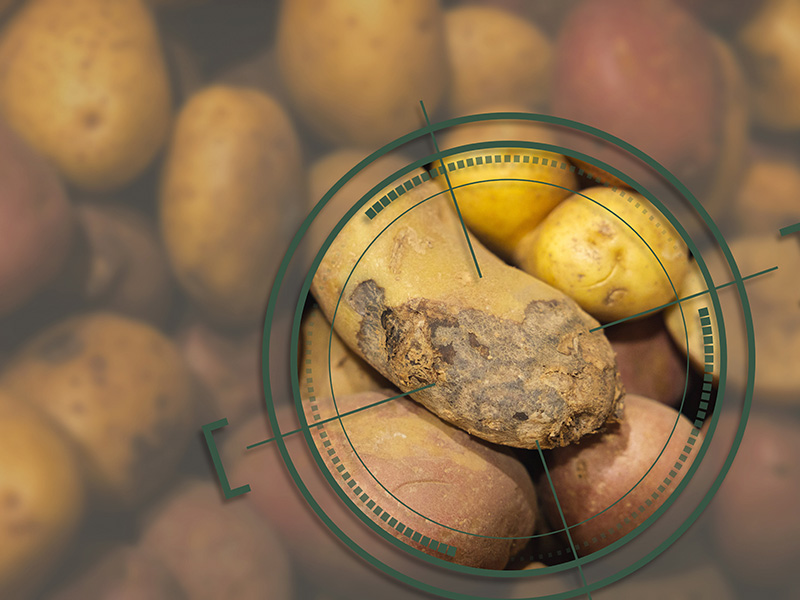
One of the most concerning issues within the potato industry is the menacing bacterium Candidatus Liberibacter solanacearum (CLso), responsible for triggering the devastating Zebra Chip (ZC) disease.
This affliction poses a severe threat to potato crops, leading to significant yield losses and compromising the quality of the produce. The dissemination of this pathogen on potato plants is closely associated with the presence of its vector, the psyllid Bactericera cockerelli (BC). The presence of BC exacerbates the damage caused, resulting in substantial economic repercussions for farmers and jeopardizing the overall food supply chain.
Beyond the challenges faced during cultivation, postharvest storage is another critical phase in securing long-term food supplies.
However, this stage is fraught with difficulties due to the prevalence of soil-borne pathogens such as Fusarium sambucinum, Colletotrichum coccodes or Helminthosporium solani, responsible for notorious diseases like dry rot, black dot, and silver scurf.
A Comprehensive Approach for Potato Protection and Beyond
PataFEST represents a dynamic and collaborative initiative, uniting 18 partners with diverse expertise in molecular biology, potato plant protection, postharvest technologies, agricultural engineering, soil health, and pest and disease management.
This multi-actor approach, underpinned by transnational research collaborations, is geared towards safeguarding the health of potato plants and preserving the quality of the final product.
 AI image
The project adopts a three-pronged strategy to safeguard potato crops:
studying molecular pest spread pathways
By understanding pest dissemination at the molecular level, disease-resistant potato varieties will be identified, enhancing crop resilience.
implementing innovative preharvest solutions with real-time tools
Cutting-edge technologies like mobile app image analysis and AI predictive models will empower farmers to protect their crops proactively.
revolutionizing postharvest technologies
Advanced solutions, including biocontrol coatings and VOC sensors, aim to control soil pathogen incidence during storage, preserving potato quality.
These strategies will be incorporated into an Integrated Pest Management approach, validated in country-specific environments like Germany, France, Spain, and the UK, major potato producers. Field trials in Ecuador will contribute to the project's global impact.


